Mediterranean Meal Planner
Planning a week of healthy meals should take minutes, not an evening. Mealiv's Mediterranean meal planner builds balanced weeks around your calorie target, your preferences and how much cooking you actually want to do.
This page explains how Mediterranean meal planning works, what a realistic week looks like, and where most plans fall apart — which is almost never at the planning stage.
Generate my Mediterranean week
What is a Mediterranean meal planner?
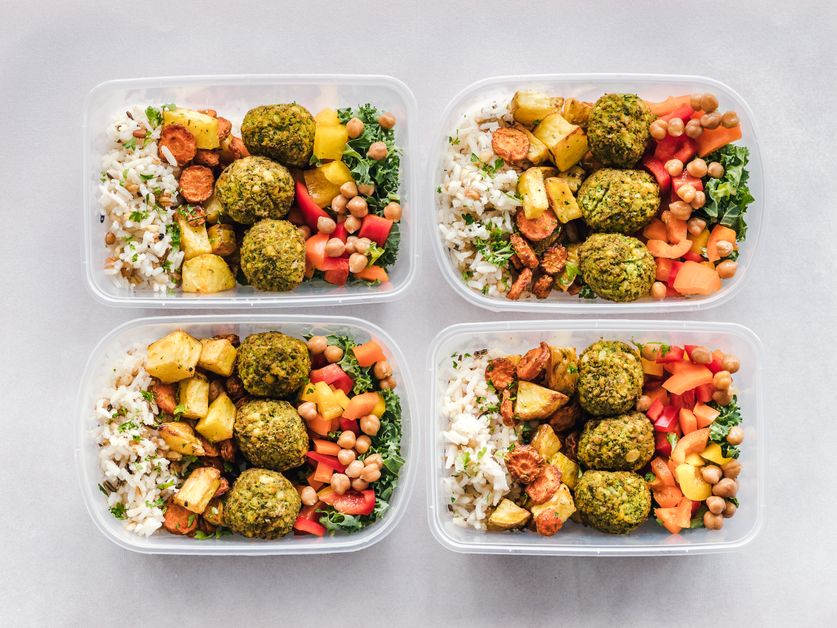
It organises breakfasts, lunches, dinners and snacks around the principles of the Mediterranean diet — vegetables at most meals, whole grains, legumes, olive oil as the main fat, fish a couple of times a week, and not much that arrives in a packet.
The value is not really the recipes. It is that the decision has already been made. Deciding what to eat at six o'clock, hungry, after work, is where good intentions reliably collapse, and a plan removes that moment entirely.
How it works
- Tell Mealiv what you need Calorie target, whether you are losing or maintaining, dietary preferences, anything you avoid, how many meals a day and roughly how long you want to spend cooking.
- Generate the week Mealiv builds a Mediterranean plan that hits your targets rather than a generic one you then have to adapt.
- Swap what you would not cook This is the important step and the one people skip. A plan with two meals you secretly dislike is a plan you abandon on Wednesday.
- Take the shopping list Generated from the finished plan and grouped by aisle, so nothing is forgotten and nothing is bought twice.
- Log as you go Calories, protein, fibre and micronutrients update against the plan, so you can see where the week actually went.
If you would rather see a finished week before building your own, the 7-day Mediterranean meal plan is a complete example you can follow as it stands.
What a balanced Mediterranean week contains
Across a week rather than in every meal:
- Vegetables at most meals, in as many colours as you can manage
- Fruit daily, often as the default pudding
- Wholegrain carbohydrates — oats, brown rice, wholemeal pasta and bread
- Beans, lentils or chickpeas several times
- Olive oil as the main cooking and dressing fat
- Fish twice or more, including oily fish once
- Poultry and eggs in moderation, red meat rarely
- Greek yoghurt, nuts and seeds as the default snacks
Notice this is a shape, not a schedule. A plan that survives contact with a real week has slack in it.
Planning for weight loss
Mediterranean eating and weight loss work well together, but not automatically. The pattern makes a calorie deficit easier to hold, because higher-fibre, less energy-dense food is more filling — it does not create the deficit for you.
So set the number first. The calorie calculator gives your daily target, the weight loss calculator turns a goal into a timeline, and Mealiv plans Mediterranean meals that fit whichever figure you land on.
The one thing to watch is olive oil and nuts. Both are genuinely good for you and both are calorie dense — a generous hand with the oil can quietly close a 500-calorie deficit.
Shopping lists that match the plan
Every plan produces its own list, grouped by supermarket aisle. You can remove what you already have, add your own items, and share it with whoever is doing the shop.
The point is not convenience so much as accuracy: a list written from the plan contains exactly the ingredients the plan needs, which is what stops Thursday's dinner failing for want of one tin. Our guide to meal planning and grocery shopping covers the wider routine, and the shopping list generator handles the mechanics.
Cook more, waste less
Add what is already in your cupboards and Mealiv prioritises recipes that use it. As you confirm meals and log food, the pantry updates, so next week's plan starts from what you actually have rather than from nothing.
Mediterranean staples suit this well — tinned tomatoes, pulses, olive oil, grains and frozen vegetables keep, combine in dozens of ways, and cost very little.
An example day
Breakfast — Greek yoghurt with berries, oats and walnuts.
Lunch — Wholegrain wrap with grilled chicken, hummus, spinach and tomatoes.
Dinner — Baked salmon with roasted vegetables, olive oil and brown rice.
Snack — An apple and a handful of almonds.
Unremarkable, which is rather the point. Mealiv generates variations on this shape endlessly, adjusted to your own calorie and protein targets, so the week stays varied without becoming a project.
Why plan at all?
Because the failure point in healthy eating is almost never knowledge. Most people know that vegetables, fish and olive oil are a good idea. What defeats them is the daily decision, made tired and hungry, with nothing suitable in the house.
A plan moves that decision to a calm moment once a week, and a shopping list makes it stick. Everything else — the recipes, the tracking, the nutrition scores — is support for that one structural change.
What else Mealiv does
Alongside planning: Mediterranean recipe suggestions built from foods you already like, nutrition analysis for any recipe before you cook it, recipe import from the web, pantry management, and tracking across calories, protein, fibre, vitamins, minerals, food quality and ultra-processed share.
That last one matters for this diet in particular. "Am I actually eating this way?" is the question a Mediterranean plan should be able to answer, and the nutrition tracker answers it with your own logged data rather than an impression.
Frequently asked questions
Is the Mediterranean meal planner free?
Core planning is available on a free account. The AI-powered planning and fuller nutrition tools come with a free trial and paid plans. No card is needed to start.
Can I customise my plan?
Yes, and you should. Swap meals, regenerate suggestions, and build around your calorie goal, allergies, dietary requirements and the foods you actually enjoy. A plan you have edited is one you will follow.
Does it create shopping lists?
Yes — automatically, from the finished plan, grouped by aisle and fully editable.
Can vegetarians use it?
Easily. Mediterranean eating is largely plant-based to begin with, so a vegetarian version leans on beans, lentils, grains, vegetables, eggs and dairy without losing the character of the diet. Vegans swap the dairy for more pulses, nuts and seeds.
Do I have to cook every meal?
No. Leftovers, salads, soups and ten-minute assemblies are all legitimate Mediterranean meals, and you can tell Mealiv how much time you have so it plans accordingly.
Is it suitable for families?
Yes. The ingredients are ordinary and the meals adapt easily — the same traybake works for everyone, with portions rather than recipes doing the adjusting.