Mediterranean Diet Guide
Learn how the Mediterranean diet works, which foods to eat, what the evidence actually shows, and how to turn it into a week of meals you will genuinely cook.
The Mediterranean diet is consistently ranked among the healthiest ways to eat. Rather than banning food groups or counting anything, it builds meals around vegetables, fruit, whole grains, legumes, olive oil, fish and minimally processed food — which is why people tend to still be following it a year later.
Mealiv supports it directly: set Mediterranean as your diet and it plans the week, writes the shopping list, and tracks how closely what you actually ate matched the pattern.
Generate your Mediterranean meal plan
What is the Mediterranean diet?
It describes the traditional eating habits of countries around the Mediterranean Sea — Greece, southern Italy, southern Spain — as recorded in the mid-twentieth century.
It is a pattern rather than a protocol. There is no phase one, no list of banned foods and no daily target to hit. The whole thing can be summarised as: mostly plants, olive oil as the main fat, fish more often than meat, and very little that comes out of a packet.
That vagueness is a feature. Diets with precise rules are easy to follow perfectly for three weeks and impossible to follow at all afterwards. A pattern bends around a birthday dinner and is still there in March.
The Mediterranean food pyramid
Traditional Mediterranean eating is usually drawn as a pyramid, with the foods eaten most often at the base:
Frequency, not portions. Nothing here is forbidden — the top tiers are simply eaten less often.
Notice what the pyramid does not do: it never tells you how much. That is deliberate, and it is the main difference between this and almost every diet marketed since.
The benefits, and how confident we can be
The Mediterranean diet has more research behind it than any other eating pattern, largely because it was studied as an observation of how people already ate rather than invented and then tested.
It is associated with better cardiovascular health, improved blood pressure and cholesterol, better blood glucose control, higher fibre intake, and a lower intake of ultra-processed food.
Two honest caveats. Much of the evidence is observational, so it shows association rather than proof of cause. And "Mediterranean diet" covers a wide range of real diets, so studies do not all test quite the same thing.
What is not in dispute is the direction: more vegetables, more fibre, more unsaturated fat, less ultra-processed food and less red meat is a change almost nobody's diet gets worse from.
What to eat
Vegetables
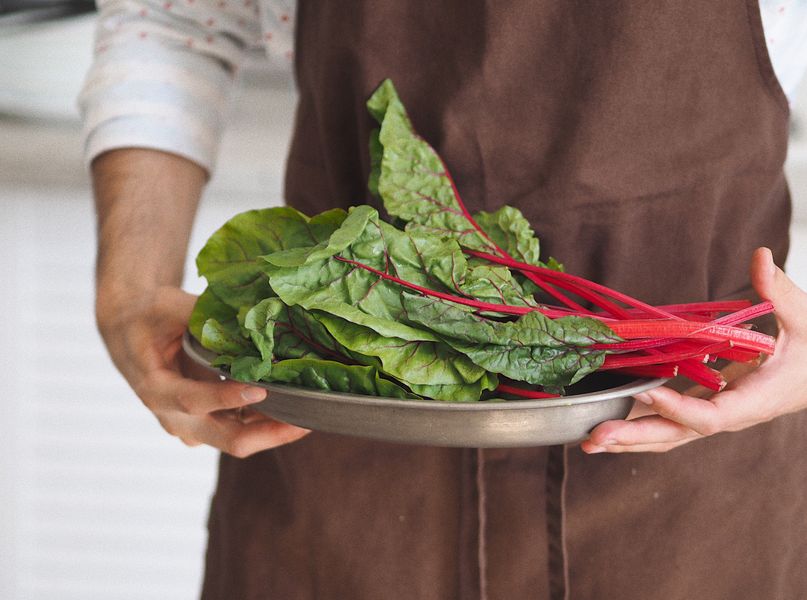
The base of the pyramid, at most meals. Tomatoes, peppers, courgettes, aubergines, broccoli, spinach, kale, carrots, onions, mushrooms, fennel, artichokes. Variety matters as much as quantity — different colours carry different plant compounds.
Fruit
Daily, and typically as the default pudding. Apples, oranges, grapes, berries, pears, figs, peaches, melon.
Olive oil and other fats
Extra virgin olive oil is the defining ingredient, used for cooking and dressing rather than as an occasional condiment. Alongside it: olives, avocado, nuts and seeds.
Worth knowing that olive oil is around 120 calories a tablespoon. It is a healthy fat and it is still energy dense, which matters if you are eating for weight loss.
Whole grains
Oats, brown rice, wholemeal pasta, wholegrain bread, quinoa, bulgur wheat, farro. Bread and pasta are not restricted here — that is a low-carb idea imported from elsewhere.
Legumes
Lentils, chickpeas, beans. The most under-eaten category on this list for most British households, and the cheapest source of fibre and plant protein available.
Fish and seafood
At least twice a week, including oily fish such as salmon, sardines and mackerel for long-chain omega-3.
Poultry, eggs and dairy
In moderation. Greek yoghurt and modest amounts of cheese are traditional; large portions of meat are not.
What to limit
Nothing is banned. These are simply eaten less often: sugary drinks, cakes and pastries, crisps, processed meats, fast food, refined carbohydrates, ultra-processed snacks, and more than modest amounts of alcohol.
Red and processed meat sits at the very top of the pyramid, eaten rarely rather than never — which is a considerably easier instruction to follow than eliminating it.
Mealiv tracks your ultra-processed intake as a share of what you log, so the shift is something you can see happening gradually rather than a switch you are supposed to flip.
Is it good for weight loss?
It can be, though it was never designed for it — and being honest about the mechanism matters.
Weight loss still requires a calorie deficit. The Mediterranean diet does not suspend that. What it does is make a deficit easier to hold, because the foods it favours are higher in fibre, more filling and less energy dense than the ones it displaces. You end up eating fewer calories without setting out to.
The counterweight is olive oil and nuts, which are genuinely calorie dense. Plenty of people adopt Mediterranean eating, add four tablespoons of oil a day, and are puzzled when nothing moves.
If weight loss is the goal, pair the pattern with a number: the calorie calculator for your daily target, or the weight loss calculator to work out a realistic timeline.
How Mediterranean eating compares
Against keto: almost the opposite approach. Keto restricts carbohydrate hard and relies on that restriction; Mediterranean eating includes bread, pasta, grains and fruit freely. Keto produces faster early weight loss and is considerably harder to sustain. Our keto and weight loss guide and keto vs low carb comparison cover that side.
Against low-fat dieting: Mediterranean eating is not low fat at all — roughly 35–40% of energy comes from fat, nearly all of it unsaturated. The distinction it draws is between types of fat, not amounts.
Against "clean eating": there is no moral framing here. Nothing is clean or dirty, and a pastry on Sunday does not break anything.
How Mealiv helps
Mediterranean is a built-in diet setting rather than something you have to approximate. Choose it and everything downstream adapts.
Personalised meal plans
Give Mealiv your calorie target, preferences and how much cooking you actually want to do, and it builds a Mediterranean week around it. The Mediterranean meal planner walks through how that works.
Recipes that fit
Suggestions built from foods you already like, so the plan looks like something you would have chosen. You can also check any recipe's nutrition before cooking it.
Shopping lists
Generated straight from the plan and grouped by aisle. Our guide to meal planning and grocery shopping covers the wider routine, and the shopping list generator handles the list itself.
Pantry-aware planning
Add what is already in the cupboard and Mealiv prioritises recipes that use it, which cuts both waste and cost.
Nutrition tracking
Calories, protein, fibre, healthy fats, vitamins, minerals, food quality and ultra-processed share — so "am I actually eating this way?" becomes a question with an answer. The nutrition tracker shows the detail.
Who does it suit?
Most people, which is unusual for a diet. It works for anyone wanting to lose weight, improve heart health, eat less processed food, get more fruit and vegetables in, or simply build habits that outlast January.
It adapts easily too. Vegetarians lean on legumes, eggs and dairy; pescatarians barely need to change anything; vegans drop the dairy and add more pulses and nuts. The pattern survives all three because it was mostly plants to begin with.
If you have a medical condition requiring a specialist diet, or you take medication affected by what you eat, check with your GP or dietitian before making significant changes.
How to actually start
Not all at once. The people who sustain this change two or three things and let the rest follow.
- Cook with olive oil instead of butter or sunflower oil.
- Add a vegetable to a meal you already make, rather than inventing new meals.
- Put fish on the menu twice a week — tinned sardines and frozen fillets count.
- Swap one refined grain for a wholegrain version.
- Make one meal a week meat-free with lentils or chickpeas.
- Have fruit and nuts where a biscuit would have gone.
Six changes, one at a time, is a couple of months of small adjustments and a permanently different way of eating. Our guide to planning meals weekly is the routine that holds it together.
Frequently asked questions
Is the Mediterranean diet healthy?
It is the most extensively researched eating pattern there is, and is widely recommended as part of a balanced lifestyle. Most of the evidence is observational, so it shows association rather than proof — but the direction of that evidence is consistent and the changes it asks for are sensible regardless.
Can you eat bread?
Yes. Wholegrain is preferred over refined white, but bread is a normal part of the pattern rather than something to work around.
Can you eat pasta?
Yes, and it is genuinely traditional. Wholemeal is encouraged, usually with vegetables, olive oil, legumes or fish rather than a heavy processed sauce. Portion size matters more than exclusion.
Is olive oil healthy?
Extra virgin olive oil is the primary fat here and is predominantly unsaturated. It is also about 120 calories a tablespoon, so if you are eating for weight loss the amount still counts.
Do you need to count calories?
Not to eat this way. If weight loss is the goal then yes, at least at first — the pattern makes a deficit easier to sustain but does not create one by itself.
Is it expensive?
It does not have to be. The staples are among the cheapest food available: dried lentils, tinned beans, tinned sardines, frozen vegetables, oats, seasonal produce. The expensive version of this diet is the one built around fresh fish and imported ingredients, and it is not the traditional one.
Can I drink wine?
Traditional Mediterranean eating includes modest wine with meals, but current UK guidance does not recommend starting to drink for health reasons, and the alcohol-related findings in this research are among its most contested. Treat wine as optional rather than part of the prescription.
Continue exploring
Sources
- NHS — The Eatwell Guide
- NHS — Fish and shellfish
- British Nutrition Foundation — Healthy and sustainable diets
- British Heart Foundation — The Mediterranean diet
- Estruch R et al. (2018) — PREDIMED: Primary prevention of cardiovascular disease with a Mediterranean diet
This guide is general information, not medical advice. Speak to a GP or registered dietitian before significant dietary changes if you have a health condition.