Macros for Muscle Gain: How to Fuel Muscle Growth Effectively
Building muscle takes more than lifting. Nutrition supplies both the material and the energy — and it is usually the half that gets neglected.
Total calories matter, but the balance of protein, carbohydrates and fat determines whether your body has what it needs to train hard and recover from it.
Mealiv builds personalised plans to your calorie and macro targets, so eating consistently does not require an evening of calculations every Sunday.
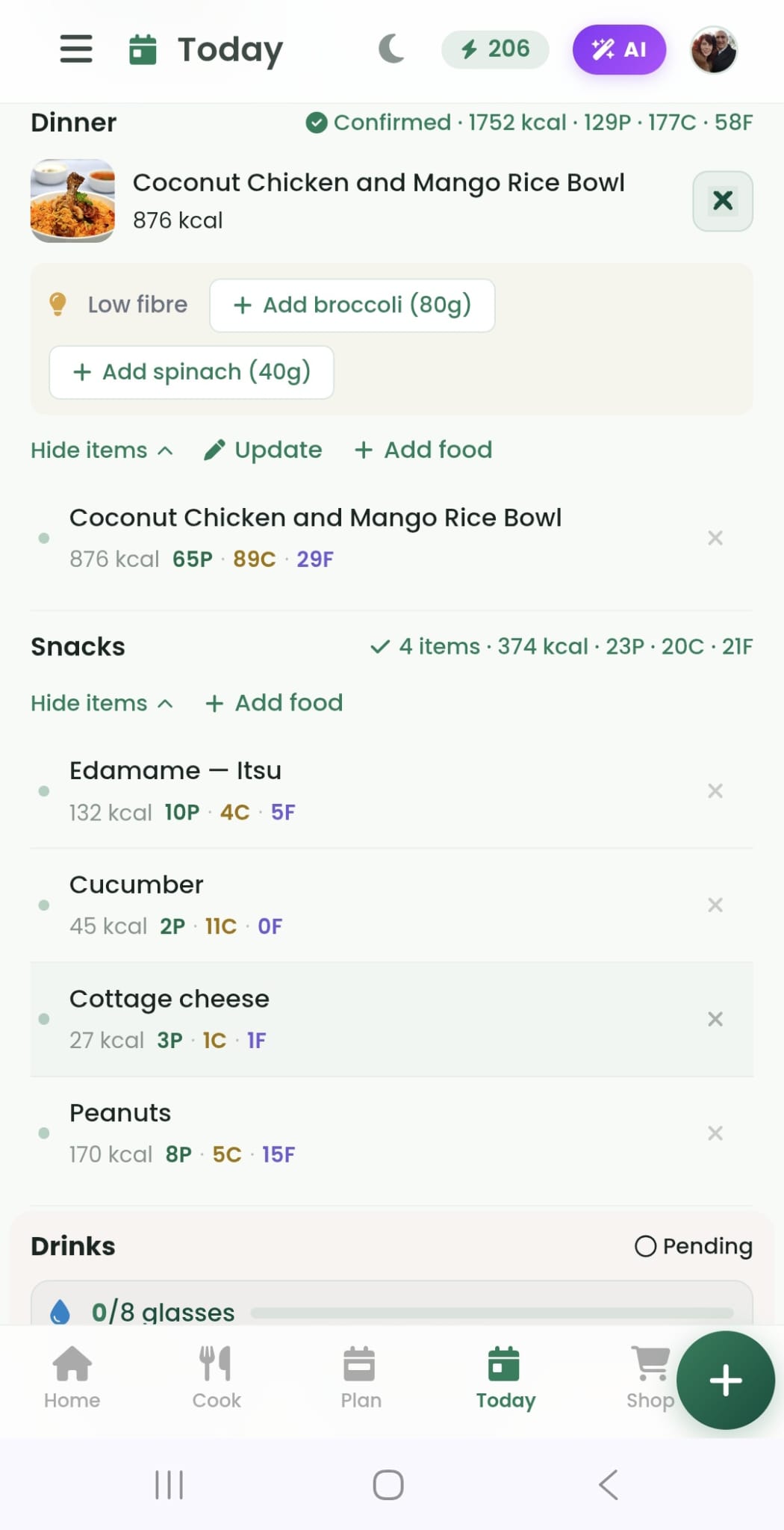
Why macros matter for muscle gain
To build muscle your body needs enough calories to grow on, enough protein to repair with, carbohydrates to fuel the training, healthy fats to support hormone production, and a diet with the vitamins and minerals to underpin all of it.
Muscle gain is the goal where getting this wrong is most obvious. Under-eat and you train badly and recover worse; over-focus on protein at the expense of total energy and you can eat a great deal of chicken while going nowhere.
Protein for growth
Protein supplies the amino acids used to repair and build muscle tissue. Including a source with every meal is the simplest way to reach a daily target.
- Chicken breast
- Turkey
- Lean beef
- Salmon
- Tuna
- Eggs
- Greek yoghurt
- Cottage cheese
- Tofu
- Tempeh
- Lentils
- Chickpeas
Mealiv tracks protein automatically and can weight the plan towards higher-protein recipes. Set the target with the protein calculator.
Carbohydrates fuel training
Carbohydrates are the body's preferred fuel for moderate and high-intensity exercise. Eating enough supports workout performance, replenishes glycogen, improves recovery and keeps training intensity where you want it.
- Oats
- Brown rice
- Wholemeal pasta
- Potatoes
- Sweet potatoes
- Wholegrain bread
- Fruit
- Beans
This is the macro most often cut by habit rather than reason. If you are training seriously, cutting it is usually working against you.
Healthy fats support recovery
Fats contribute to hormone production, brain function, vitamin absorption and general health. Olive oil, avocados, mixed nuts, seeds, peanut butter and oily fish all earn their place.
They are energy-dense, which on a muscle-gain diet is frequently an advantage rather than a problem.
How many macros do you need?
There is no single split. Yours depends on body weight, activity level, training volume, age, sex, your goals and what you like eating.
The macro calculator gives a personalised starting point; the best macro ratio explains why the starting point is all any calculator can honestly offer.
An example day of eating
A balanced day for someone training. Portions scale to your own targets.
- Breakfast Porridge with Greek yoghurt, banana and peanut butter.
- Mid-morning snack Cottage cheese with berries and mixed seeds.
- Lunch Grilled chicken, brown rice and roasted vegetables.
- Afternoon snack Wholegrain toast with peanut butter and banana.
- Dinner Salmon with sweet potato and broccoli.
- Evening snack Greek yoghurt with oats and blueberries.
Mealiv adjusts portions and recipes to your own calorie and macro targets rather than expecting you to eat exactly this.
Meal planning for muscle gain
Plans are built from your daily calorie target, protein goal, training days, dietary preferences, favourite foods, allergies, cooking time and household size — and they move as your goals do.
The general version is the macro meal plan; for protein-led eating specifically, see high protein meal plans and high protein meals.
AI-powered planning
The AI meal planner raises protein automatically, balances carbohydrates around training, suggests swaps, recommends recipes that suit the goal, refreshes the week and scales recipes to your calorie needs.
Nutrition tracking
Calories, protein, carbohydrates, fat, fibre, vitamins, minerals and the Food Quality Score, all tracked as you log. Over a few weeks that tells you whether you have actually been eating the way you think you have — which is usually the difference between progress and confusion.
Shopping lists that match the plan
Generated from your plan, grouped by category, pantry-aware, scaled to your household, updated automatically and exportable to Tesco, Asda and Sainsbury's.
Common mistakes
Not eating enough overall
The most common one by some distance. Plenty of people obsess over protein while eating too little total energy to build anything with it.
Ignoring carbohydrates
They fuel the training that creates the stimulus. Cutting them tends to show up as worse sessions before it shows up anywhere else.
Eating the same meals every day
Variety improves nutrient intake and makes a plan survivable. Mealiv refreshes the week while holding the targets steady.
Forgetting overall nutrition
Fibre, vitamins and minerals do not appear in a macro split, and a diet can hit every target while lacking them.
Frequently asked questions
What are the best macros for muscle gain?
There is no universal ratio — it depends on your calorie needs, training volume, body size and goals.
Is protein the most important macro?
It is important for maintenance and growth, but carbohydrates and fats support the performance, recovery and health that make the protein useful.
Should I eat more on training days?
Some people do. It depends on your routine and goals, and Mealiv can adapt the plan either way.
Can Mealiv create muscle gain meal plans?
Yes, from your calorie target, macro goals, dietary preferences and activity level.
Continue exploring
Related reading: high protein meal plans, high protein meals and how to hit your protein goals every day.