How to Track Macros on a Keto Diet
If you're wondering how to track macros on a keto diet, you're already taking one of the most important steps towards staying in ketosis and achieving your health goals. Whether you're following keto to lose weight, improve blood sugar control or simply reduce your carbohydrate intake, understanding your daily intake of fat, protein and carbohydrates can make a huge difference.
Unlike many diets that simply focus on calories, a ketogenic diet relies on eating the right balance of macronutrients, commonly known as macros. Too many carbohydrates may prevent your body from entering ketosis, while eating too little protein or fat can leave you feeling hungry or lacking energy.
The good news is that tracking your keto macros doesn't have to involve endless calculations or complicated spreadsheets. With the right approach — and the right tools — you can build healthy habits that become second nature.
In this guide, you'll learn:
- What keto macros are and why they matter.
- How to calculate your daily macro targets.
- How to track your macros accurately.
- Common mistakes to avoid.
- How Mealiv can automatically calculate your macros while building personalised keto meal plans.
New to keto? Start with our ketogenic diet coaching guide and the keto meal plan for beginners. Deciding between approaches? See keto vs low carb.
What Are Keto Macros?
Macronutrients are the nutrients your body needs in the largest quantities:
- Fat
- Protein
- Carbohydrates
Each provides energy, but on a ketogenic diet they play very different roles.
Fat becomes your body's primary fuel source once you enter ketosis and supplies 9 calories per gram.
Protein helps repair and maintain muscles, organs and other body tissues. It provides 4 calories per gram and should generally be eaten in moderate amounts on keto.
Carbohydrates also provide 4 calories per gram, but they're heavily restricted on a ketogenic diet. By limiting carbohydrates, your body switches from using glucose as its main source of energy to producing ketones from stored fat.
This metabolic state is known as ketosis, and it's the defining characteristic of a ketogenic diet.
Why Tracking Macros Matters on Keto
One of the biggest misconceptions about keto is that you can simply eat unlimited amounts of fatty foods. In reality, successful keto diets rely on balancing your macronutrients while keeping carbohydrates consistently low.
Tracking your macros helps you:
- Stay within your carbohydrate limit.
- Ensure you're eating enough protein.
- Maintain an appropriate fat intake.
- Avoid hidden carbohydrates in processed foods.
- Monitor your calorie intake alongside your macros.
Without tracking, it's surprisingly easy to consume more carbohydrates than you realise. Sauces, dressings, drinks and even some “keto-friendly” snacks can quickly add up. Tracking also gives you confidence that your meals are supporting your goals rather than working against them.
How to Calculate Your Keto Macro Targets
Before you start tracking, you need to understand what you're aiming for. Your ideal macro split depends on factors such as your age, sex, height, weight, activity level and goals (weight loss, maintenance or muscle gain).
Although recommendations vary slightly, a typical ketogenic diet looks something like this:
| Macronutrient | Typical Percentage |
|---|---|
| Fat | 70–75% |
| Protein | 20–25% |
| Carbohydrates | 5–10% |
These percentages are only a starting point. Some people require slightly more protein, while others may tolerate slightly more carbohydrates and still remain in ketosis. To turn percentages into grams for your own body, use our macro calculator (and the calorie calculator for your daily energy target).
Fat
Fat supplies most of your daily energy on keto. Good sources include olive oil, avocados, oily fish, nuts and seeds, full-fat dairy and eggs. Because fat contains more than twice the calories per gram compared with protein or carbohydrates, portion sizes still matter if your goal is weight loss — our calorie deficit calculator can help.
Protein
Protein requirements depend on your activity level. People who regularly strength train or exercise may benefit from a higher protein intake than someone who is largely sedentary. Aim to include quality protein with each meal, such as chicken, turkey, beef, fish, eggs, Greek yoghurt or tofu (if suitable for your diet). For a protein-led plan, see the high-protein meal planner.
Carbohydrates
Most people following keto aim to consume around 20–50g of net carbohydrates per day. Net carbohydrates are calculated by subtracting fibre from total carbohydrates. Monitoring this consistently is one of the most important aspects of staying in ketosis. If you'd rather keep carbs low without going fully keto, our low carb weekly meal planner is a gentler option.
How to Track Macros on a Keto Diet
Once you've calculated your targets, the next step is building a simple routine.
1. Plan your meals first
Planning your meals before the day begins makes it much easier to hit your macro targets. Rather than deciding what to eat when you're hungry, you'll already know how each meal contributes towards your daily totals.
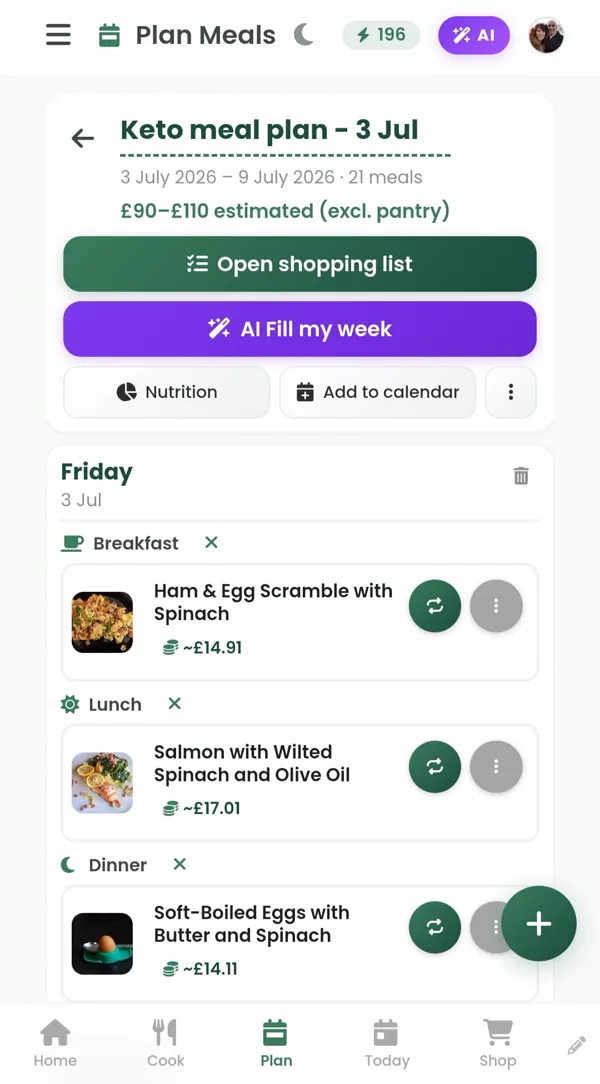
Mealiv creates personalised keto meal plans based on your calorie target and dietary preferences, automatically calculating the calories and macros for every meal before you even start cooking. Explore the keto meal planner or the AI keto meal planner.
2. Weigh ingredients where possible
Especially during your first few weeks, using digital kitchen scales is much more accurate than estimating portion sizes. Foods such as cheese, nuts, oils and peanut butter are particularly easy to underestimate.
3. Log everything
Don't forget cooking oils, butter, dressings, sauces, drinks and snacks. Small additions throughout the day can significantly affect your macro totals.
Mealiv lets you log food by typing, speaking, scanning a barcode, taking a photo, or logging directly from your meal plan — and the nutrition tracker keeps a running total of your macros. This removes much of the manual work from macro tracking.
4. Review your day
Rather than aiming for perfection, review your intake each evening. Ask yourself:
- Did I stay within my carb target?
- Was my protein intake close to target?
- Did my meals keep me satisfied?
- What could I improve tomorrow?
Consistency matters far more than achieving exactly the same numbers every day.
Common Mistakes When Tracking Keto Macros
Many people struggle with keto because of small mistakes rather than major ones. Common issues include:
Estimating portions
A handful of nuts can easily contain twice as many calories as expected.
Ignoring hidden carbohydrates
Many condiments, sauces and processed foods contain added sugars.
Forgetting drinks
Milky coffees, smoothies and alcoholic drinks can all contribute carbohydrates.
Chasing perfect percentages
Your daily macro percentages don't need to be identical every day. Focus on staying within your carbohydrate target while maintaining a sensible calorie intake.
How Mealiv Makes Tracking Keto Macros Easier
Tracking macros manually can quickly become repetitive. Mealiv brings meal planning, nutrition tracking and shopping together in one place, reducing the amount of manual calculation required.
With Mealiv you can:
- Generate personalised keto meal plans.
- Automatically calculate calories and macros.
- Swap meals while keeping your nutrition balanced.
- Build shopping lists instantly.
- Log meals from your planner.
- Scan food barcodes for nutritional information.
- Track your progress over time.
Instead of spending time entering numbers into multiple apps, Mealiv keeps your meal planning and macro tracking connected. Prefer to build a full week automatically? Try the AI meal planner.
Frequently Asked Questions
How many carbs can I eat on keto?
Most people aim for between 20 and 50g of net carbohydrates per day, although individual tolerance varies.
Do I need to track macros every day?
Tracking is particularly valuable when you're new to keto. As you become familiar with portion sizes and common foods, you may find you need to track less frequently.
What's the difference between total carbs and net carbs?
Net carbs are calculated by subtracting fibre from total carbohydrates, as fibre has a much smaller effect on blood glucose.
Can I lose weight without tracking macros?
Yes, but tracking often improves consistency and helps identify hidden sources of carbohydrates or excess calories.
Does Mealiv calculate keto macros automatically?
Yes. Mealiv automatically calculates calories, fat, protein and carbohydrates for every meal in your plan. As you swap meals or adjust portions, your nutritional totals update automatically, making it much easier to stay on track.
Final Thoughts
Learning how to track macros on a keto diet doesn't need to be complicated. Once you understand your carbohydrate, protein and fat targets, tracking becomes a simple daily habit that helps you stay consistent and make informed food choices.
The most successful keto diets aren't built on perfect calculations — they're built on sustainable routines. Planning meals in advance, logging your food honestly and reviewing your progress regularly can make staying in ketosis much easier.
Mealiv simplifies the entire process by combining personalised keto meal planning, automatic macro calculations, nutrition tracking and smart shopping lists in one place. Instead of juggling multiple apps and spreadsheets, you can focus on eating well while Mealiv keeps your macros organised.